
Designer Diary · October 5, 2026
I grew up on TRON, WarGames, Sneakers, Hackers, and later The Matrix. Computers in those movies were places. There were doors that should stay closed, people guarding them, and people very keen to get through.
Then computers became my job, and the glowing mystery turned into tickets and passwords.
Firewall came out of the gap between those two worlds. The short version: I found something open on my own network that should not have been.
Firewall did not start because I wanted to make a hacker game. It started with a setting I never turned on.

It Started with a Setting I Did Not Turn On
I was doing routine tightening on my home network when I noticed UPnP was enabled. I had not enabled it. My best guess is that a firmware update flipped it at some point, but I cannot prove that.
Looking closer, I found ports 22 and 1910 open without the firewall rules I expected. Nothing had been breached. I run a separate firewall downstream from the router, so there was another layer behind the open ports.
Then I opened the logs.
The network was being scanned. Nothing dramatic, and nobody in a hoodie with green text pouring down a monitor. It was the ordinary background noise of being online: systems poking at ports to see who answers. Some of it was landing on exactly the ports I had just found.
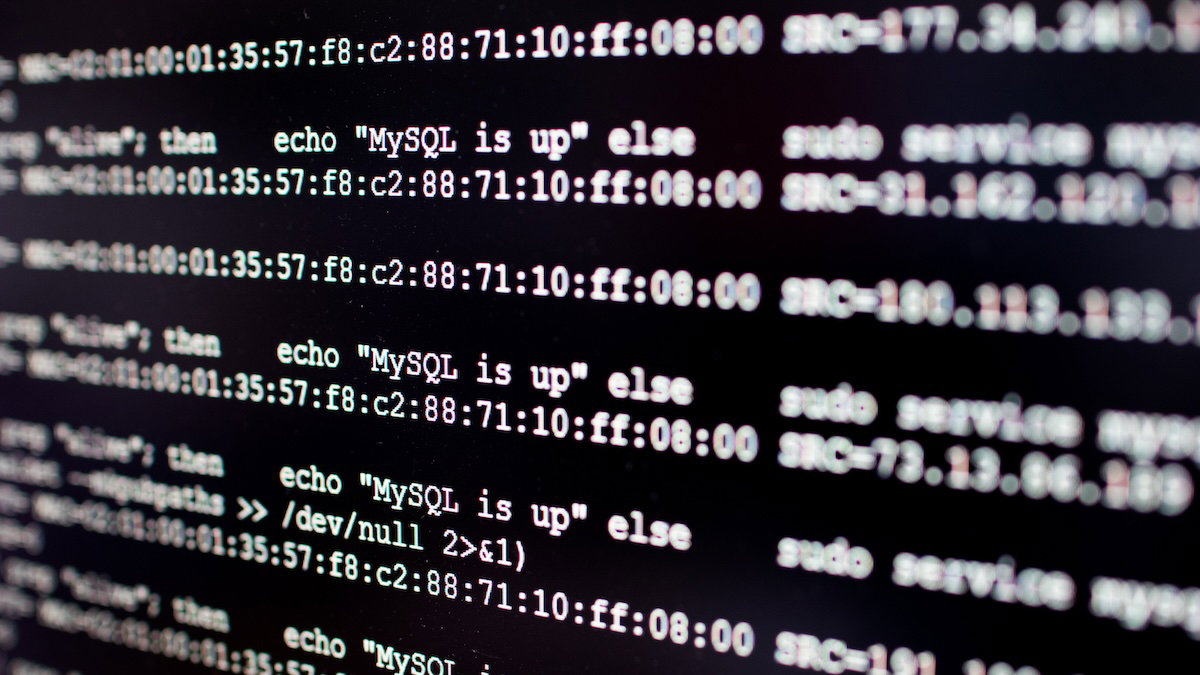
I was fascinated, and not because it was unusual. It was completely normal.
The Internet Is Always Knocking
Most of us only think about ports when something breaks. The internet works, or it does not.
Behind that is a constant stream of devices talking, rules allowing or refusing, and automated systems testing doors. The longer I read, the more it looked like a conversation between two sides. One side keeps hardening. The other keeps pressing. And whatever the attacker does today is often setup for tomorrow.
That did not sound like a simulation to me. It sounded like a game.
Why a Trick-Taking Game?
I love trick-taking because it rarely lets you just do what you want. You hold a hand. Someone leads. You have obligations. Your partner knows things you do not. The card you are dying to play is sometimes the one you are not allowed to play.
That felt right.
What I did not want was a menu. No "Scan Port" button for Red, no "Close Port" button for Blue. That would be accurate, and it would be dull.
So the cards do the work. In Firewall, the four suits become four network Ports. Cards stacked on a Port form Firewall layers, and the top card becomes the active Cap, which changes what can win a trick there. The network changes the card game, and the card game changes the network.
Red, Blue, and the Trick That Does Not Always Help
Security people talk about Red teams (attackers) and Blue teams (defenders). Both partnerships play both roles, switching between rounds.
As Blue, you Fortify. Win the right trick and you add a card to a Firewall stack, which deepens the defense and changes the Cap. As Red, you Breach. Win a trick and you may strip away the top layer and see what is underneath. A Port can end up wide open.
The catch is that winning is only half the job. Red cannot smash a Firewall just because it wants to. Sometimes Red takes the trick and nothing it holds lines up with a protected Port, so there is nothing useful to breach. Blue has the mirror problem: fortifying a Port sounds obviously good until the new Cap reshapes how that suit plays.
In Firewall, winning the trick is only half the question. The other half is whether that trick actually lets your team do what it needs to do.
Why Partners?
The old movie hacker is one person at one keyboard. Real attacks often are not. Compromised machines pitch in, automation probes thousands of targets, and lots of small pieces add up to one big push.
I was not trying to simulate a botnet. I wanted the feeling behind it. What if the useful card did not have to come from the player who won the trick?
So after your team wins, either card your partnership played can be the one that matters. Your partner's harmless-looking off-suit card might be exactly what you needed. Now the question at the table is not just "can we win this?" but "if we do, which of our cards actually counts?"
The Movie Version and the Real Version
I still love the movie version. Sneakers made social engineering and cryptography feel like an adventure. Hackers was not a documentary, but it celebrated the idea that computers could be understood and explored. Mr. Robot later brought a darker and more grounded take.
The real job is smaller. Accounts, permissions, updates, logs. A user who definitely did not change anything, and a system that definitely did. And now and then, staring at a firewall wondering why something is switched on that you were sure you had switched off.
The fantasy made me curious. The real work gave me the game.
You Do Not Need Any of This to Play
Firewall is not a networking class. You do not need port numbers, firewall syntax, or any idea what UPnP is. You sit down, learn the cards, and play.
That is deliberate. Someone who works in IT might smile at the language. Everyone else should still have a good time, because if the theme vanished and the card play stopped being interesting, I would not have made a good game.
Theme can suggest the problem. It should never excuse a weak game.
What Keeps Me Coming Back
Of my computer-themed games, Firewall is the one I keep returning to. A trick is not just a point. It changes something. A Fortify can protect a Port and quietly change how that suit behaves. A Breach can expose a different Cap underneath. A card from your partner can matter more than the one that won.
The table keeps shifting, and I like that.
I fixed my network, by the way. No breach, no emergency, nobody announcing they were in. But I kept wondering what it feels like when one side keeps probing and the other keeps hardening, and what happens when today's defense changes tomorrow's attack. Apparently, in my head, the answer was a partnership trick-taking game.
Pass It Around the Table
You do not need a server room for any of this. Everybody has a story about something that turned out to be left open, switched on, or changed when they were not looking.
A few questions to try, before or after a game:
- What is the most surprising thing you ever found out you had been leaving unlocked, unplugged, or turned on?
- When did you discover that something you thought was safe had been getting poked at all along?
- Who is the "partner" you rely on to cover the thing you cannot see?
I would love to hear yours at the table.